Understanding Containerized Water Treatment Systems
As the demand for efficient water treatment solutions grows, Containerized water treatment systems have emerged as a revolutionary approach to addressing diverse water quality challenges. These innovative systems offer the unique advantage of modularity, allowing them to be customized for various applications, ranging from municipal water supplies to industrial processes and emergency response scenarios. With their ability to quickly adapt and be relocated, containerized systems represent a significant step forward in water treatment technology.
What are Containerized Water Treatment Systems?
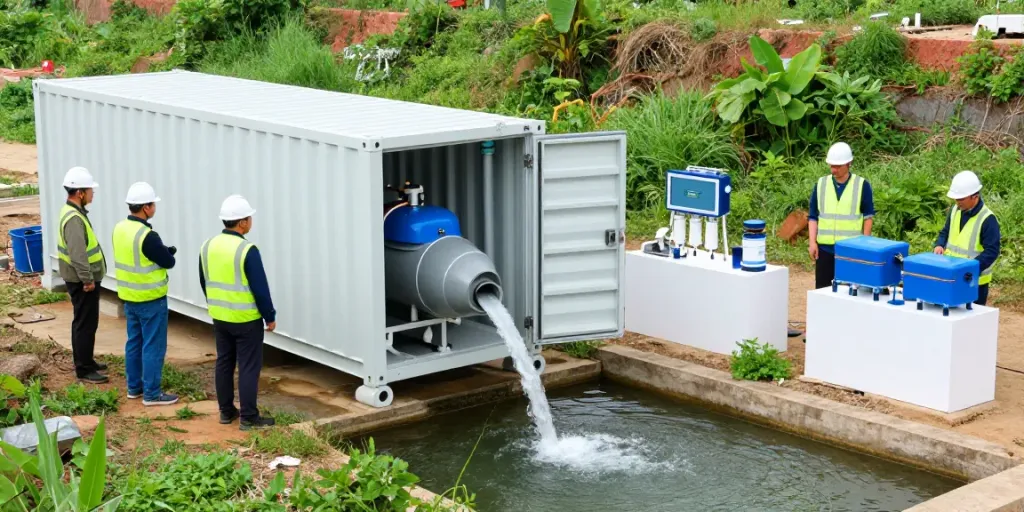
Containerized water treatment systems are essentially compact, modular facilities designed to enhance the water treatment process in various settings. Housed within standard shipping containers, these systems integrate multiple treatment processes into a single, cohesive unit. They can treat water from various sources, including surface water, groundwater, and even municipal wastewater. The modular nature of these systems means they can be rapidly deployed and easily scaled according to specific needs.
Typically, these systems utilize advanced technologies such as reverse osmosis (RO), ultrafiltration, and UV disinfection, ensuring high levels of water purity and safety. Their portability allows them to be used in remote locations, where traditional water treatment infrastructure may be impractical or cost-prohibitive.
Key Components and Technology Behind the Systems
Containerized water treatment systems consist of several key components that work together to deliver clean, safe water. These components often include:
- Pre-treatment Units: These are essential for removing large particles and sediments before the main treatment process, ensuring the longevity of the equipment.
- Membrane Filtration Systems: Utilizing technologies like RO and ultrafiltration, these systems effectively remove contaminants, ensuring high-quality effluent.
- Disinfection Units: Advanced disinfection methods, including UV treatment and chemical dosing, are employed to eliminate pathogens, making the water safe for consumption.
- Control Systems: Intelligent control systems allow for real-time monitoring, ensuring consistent quality and facilitating remote operation when necessary.
The integration of automation and smart technology is transforming how these systems operate, enabling them to adapt to varying water quality inputs and outputs dynamically.
Different Applications for Municipal and Industrial Use
Containerized water treatment systems find applications across a variety of sectors:
- Municipal Water Supply: These systems are ideal for providing drinking water in remote or underserved areas, ensuring accessibility to clean water for communities.
- Industrial Applications: Industries such as pharmaceuticals and food processing require high-purity water, which these systems can reliably produce.
- Integrated Solutions: Containerized systems often support the integration of reclaimed water, promoting sustainable practices and resource recycling in industrial processes.
- Emergency Response: In disaster-stricken areas, rapid deployment of containerized systems can facilitate immediate access to potable water, supporting relief efforts.
Advantages Over Traditional Water Treatment Systems
Reduced Deployment Time and Cost-Effectiveness
One of the most significant advantages of containerized water treatment systems is their rapid deployment capability. While traditional systems often require extensive on-site construction—taking anywhere from 3 to 6 months—containerized systems can be operational within just 3 to 7 days. This reduction in deployment time translates into substantial cost savings, as construction expenses and logistical challenges are minimized.
Space Efficiency and Environmental Considerations
Containerized systems are designed to occupy minimal space, often requiring only a flat piece of ground for placement. This is in stark contrast to traditional systems that may necessitate large plots of land for civil engineering and complex site preparations. The compact footprint of containerized systems helps save nearly 50% in floor space, making them an environmentally friendly option that reduces the land use impact.
Furthermore, these systems support sustainable practices by enabling the integration of reclaimed water modules, which can recycle resources at a rate of up to 80%.
High Purity and Quality Control Features
Quality control is paramount in water treatment, especially in applications where high-purity water is required. Containerized water treatment systems are equipped with intelligent control mechanisms that facilitate real-time monitoring and adjustments. This continuous quality assurance enables operators to maintain optimal water quality consistently, ensuring compliance with public health standards.
Moreover, the factory prefabrication of components ensures standardized inspection and quality control before deployment, further enhancing reliability and reducing the risk of on-site construction-related issues.
Deployment Scenarios and Case Studies
Municipal Water Supply in Remote Areas
In remote regions, where access to conventional water treatment infrastructure is limited, containerized water treatment systems have proven to be a game-changer. For instance, in a recent project in a rural area of Africa, a containerized system was deployed to provide drinking water to a community facing severe water scarcity. The system was operational within days, supplying clean drinking water and significantly improving community health outcomes.
Industrial Applications: Factories and Laboratories
Industries like pharmaceuticals and laboratories have stringent requirements for water purity. A containerized system was recently implemented at a pharmaceutical manufacturing site, providing ultra-pure water necessary for production processes. The rapid deployment and scalability of the system allowed the company to meet production demands without the delays associated with traditional construction methods.
Emergency Response and Disaster Relief Operations
In the wake of natural disasters, the need for clean drinking water is immediate. Containerized water treatment systems can be rapidly deployed to affected areas. For example, during a recent flood response in Southeast Asia, containerized systems were set up to provide safe drinking water to displaced populations within days, demonstrating their effectiveness in emergency situations.
Challenges and Solutions in Implementation
Addressing Initial Investment Concerns
While the advantages of containerized water treatment systems are clear, initial investment costs can be a concern for prospective buyers. However, when considering the long-term savings associated with reduced deployment time and space requirements, the return on investment can be quite favorable. Manufacturers often provide financing options or leasing models to alleviate upfront costs, making these systems more accessible.
Technical Training and Knowledge Transfer
Proper training on operating and maintaining these systems is crucial to ensure longevity and optimal performance. Manufacturers like QILEE often offer comprehensive training programs for operators and maintenance staff, ensuring they are well-equipped to handle both routine and unexpected challenges.
Maintenance Considerations for Longevity
Regular maintenance is essential to keep containerized systems functioning efficiently. Manufacturers can provide routine maintenance schedules and support options, ensuring that operators can maintain the system effectively without significant downtime. The modular nature of these systems also aids in quick repairs, minimizing service disruptions.
The Future of Water Treatment: Trends and Innovations
Emerging Technologies in Water Purification
The field of water treatment technology is constantly evolving. Innovations such as advanced membrane technology, nanotechnology, and energy-efficient disinfection methods are paving the way for even more effective containerized solutions. Companies are investing in research and development to harness these technologies, making the systems more efficient and capable of handling increasingly complex water quality issues.
Potential for Smart Integration and IoT Solutions
As the Internet of Things (IoT) continues to permeate various industries, containerized water treatment systems are likely to see increased integration with smart technologies. Sensors and automated systems can optimize operations, monitor water quality in real-time, and alert operators to potential issues before they escalate.
Regulatory Changes Impacting Containerized Systems
Future regulations governing water quality and treatment processes will significantly impact the design and implementation of containerized systems. Staying ahead of regulatory changes will be crucial for manufacturers seeking to develop compliant systems that meet industry standards, ensuring accessibility and safety in water supply.
What are the benefits of containerized water treatment systems?
Containerized water treatment systems offer numerous benefits, including rapid deployment, space efficiency, high-quality water production, and significant cost savings compared to traditional systems.
How quickly can these systems be deployed?
These systems can typically be deployed within 3 to 7 days, providing a fast solution to immediate water treatment needs.
What types of water sources can they treat?
Containerized systems can effectively treat water from various sources, including groundwater, surface water, and even municipal wastewater.
Are they suitable for large-scale industrial applications?
Yes, containerized water treatment systems can be scaled to meet the needs of large-scale industrial applications while maintaining the necessary water purity standards.
What maintenance is required for containerized systems?
Regular maintenance is essential for containerized systems to ensure optimal performance. This includes routine inspections, cleaning, and potential repairs, which can be facilitated by manufacturer support and training.